1982 Penny Value: How Much Is a 1982 Penny Worth? (The 7-Variety Copper-to-Zinc Guide)
Pennies · 9 min read · Updated October 22, 2026
How Much Is a 1982 Penny Worth?
Most 1982 pennies are worth face value to about 25 cents — but the right one can be worth $18,800 or more. In 1982, the U.S. Mint switched the cent from solid copper to copper-plated zinc in the middle of the production year, creating seven distinct varieties — and one mistake pairing, the 1982-D Small Date copper cent, that was never supposed to exist. With only two confirmed examples, a genuine 1982-D Small Date copper penny sold for $18,800 at auction. The only way to identify your coin is to weigh it: copper cents weigh 3.11 grams, zinc cents weigh 2.5 grams.
Why 1982 Is the Most Interesting Year for Lincoln Cents
In the early 1980s, rising copper prices made the one-cent coin more expensive to produce than its face value. After years of debate, Congress and the Treasury finally acted: in the middle of 1982, the Mint retired the 95%-copper planchet that Lincoln cents had used since 1864 and replaced it with a cheaper copper-plated zinc core.
The switchover happened mid-year, and at the same time the Mint was using two different date punch styles — a Large Date and a Small Date. The result: seven business-strike varieties of the 1982 cent, one of the most complicated single-year sets in the entire Lincoln series. The Mint also skipped official proof sets entirely in 1982, making the business strikes the whole story that year.
Total 1982 production reached nearly 17 billion coins between Philadelphia and Denver — and somewhere inside that flood, a handful of wrong-planchet errors slipped out that collectors still hunt today.
The Seven 1982 Penny Varieties
Here is every business-strike variety struck in 1982, and where each one came from:
- 1982 (no mint mark) Large Date Copper — Philadelphia
- 1982 (no mint mark) Small Date Copper — Philadelphia
- 1982 (no mint mark) Large Date Zinc — Philadelphia
- 1982 (no mint mark) Small Date Zinc — Philadelphia
- 1982-D Large Date Copper — Denver
- 1982-D Large Date Zinc — Denver
- 1982-D Small Date Zinc — Denver
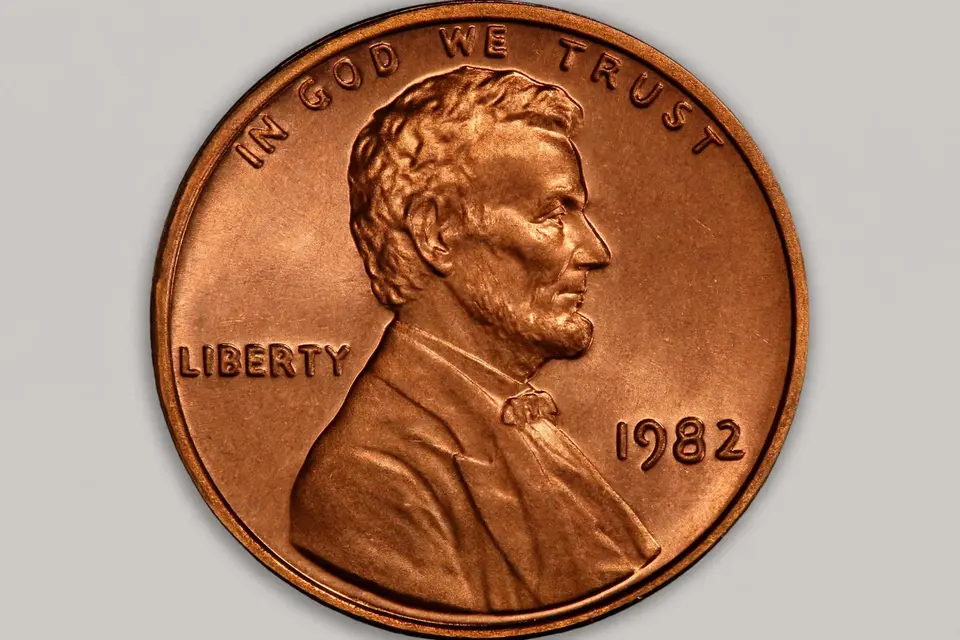
Note the famous gap: there is no 1982-D Small Date copper in the official plan. Denver was supposed to strike its Small Date cents only on the new zinc planchets. The two copper examples that turned up decades later — weighing in at a full 3.11 grams — are transitional errors struck on leftover copper blanks, and they are among the most valuable modern Lincoln cents ever found.
Copper vs. Zinc: Weigh Your 1982 Penny
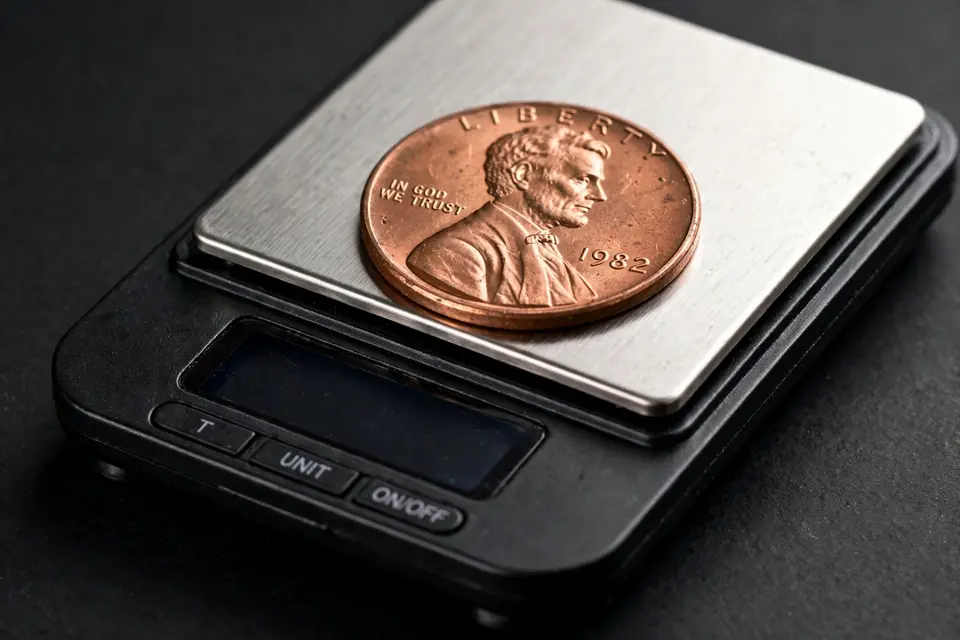
You cannot tell copper from zinc by looking. Color hints help — copper cents carry a deeper red-brown tone while zinc pieces often look slightly lighter — but the only reliable test is the scale.
- 3.11 grams = copper (95% copper, 5% zinc)
- 2.5 grams = copper-plated zinc
Use an inexpensive digital jewelry scale that reads to at least 0.01 grams. A kitchen scale is not precise enough. This single test separates the ordinary coins from the $18,800+ transitional error — and it is the first thing every collector checks.
One practical tip: zinc cents are vulnerable to "zinc rot" — once the thin copper plating breaks, the zinc core corrodes from within, producing dull gray blotches that can never be fixed. If you are saving nice 1982 zinc cents, store them dry and never clean them.
Small Date vs. Large Date: How to Tell
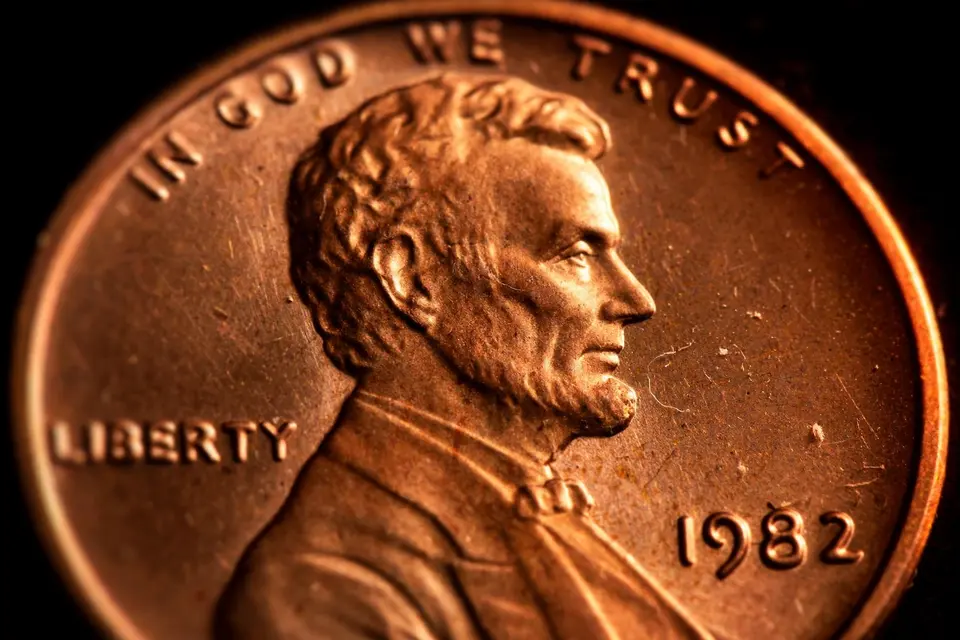
The Mint used two date styles in 1982. Telling them apart is easy once you know the diagnostic — study the "2" in the date:
- Large Date: the "2" has a thick, straight base with no curve. The "8" looks wide and full, with its lower loop noticeably bigger than the upper one. The whole date looks bold and chunky.
- Small Date: the "2" has a delicate curved base, almost like a serif foot, and the digits look slimmer and more refined. The "8" is more even in its two loops.
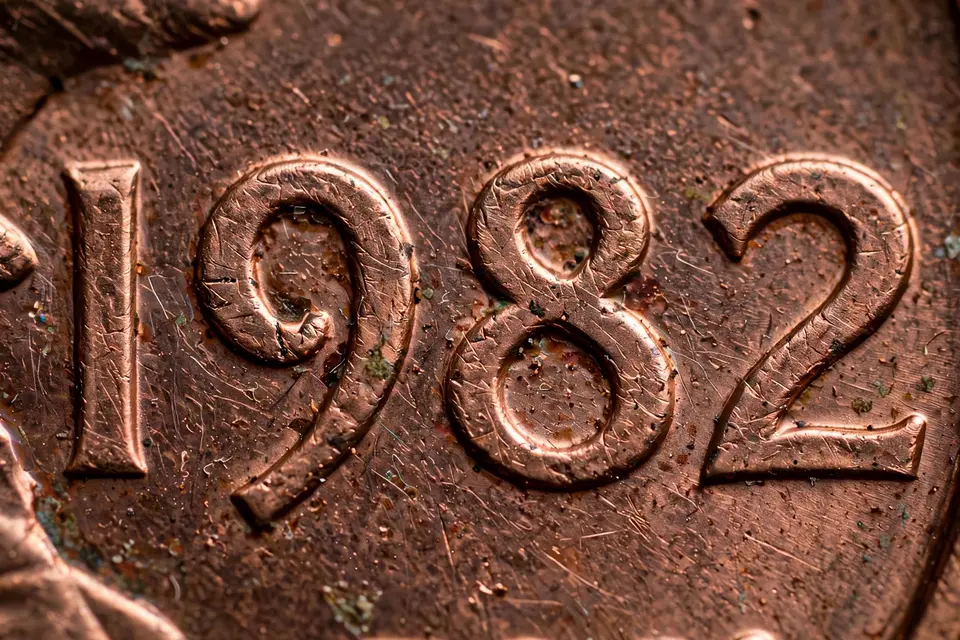
Use a 5x or 10x loupe, or your phone's camera zoom, and compare under bright light. The Small Date versions generally carry the bigger premiums — especially the 1982-D Small Date, the home of the great transitional error.
The $18,800 Penny: 1982-D Small Date Copper
This is the one that makes headlines. A 1982-D cent with the Small Date style that weighs 3.11 grams should not exist — yet two of them have been authenticated by the major grading services.
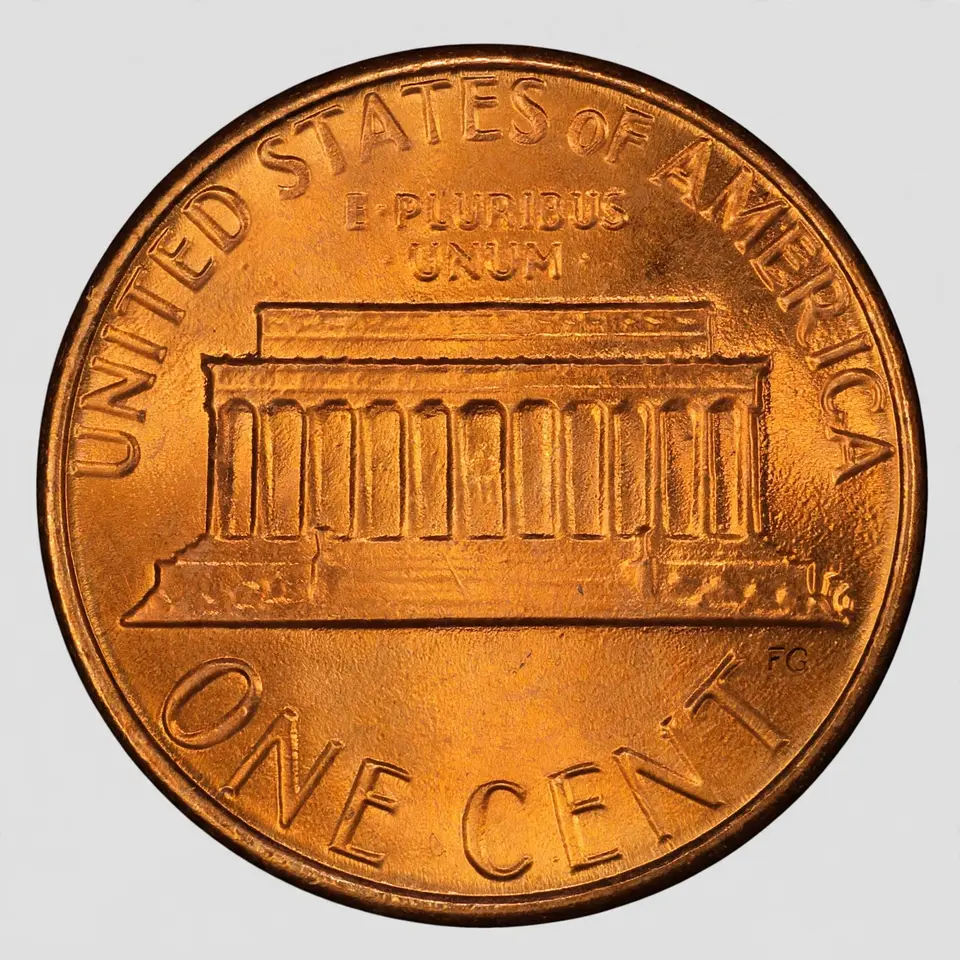
The story: as Denver switched to zinc Small Date production, a couple of leftover copper planchets found their way into the presses and were struck with the Small Date dies. The result is a transitional error coin with four required traits:
- Date: 1982
- Mint mark: "D" below the date
- Date style: Small Date (curved-base "2")
- Weight: 3.11 grams (copper)
An AU-58 example sold for $18,800+ at auction, with the second known specimen bringing $10,800. That puts it in the conversation with the famous 1943 copper errors as one of the most valuable Lincoln cents of the modern era. If your 1982-D Small Date weighs in at copper weight, stop handling it immediately and submit it for professional authentication — do not clean it, and do not sell it raw.
1982 Penny Value Table
Values below are collector market ranges. Common circulated examples stay near face value; premiums climb sharply for high-grade uncirculated coins and the rare varieties.
| Variety | Circulated | Uncirculated | Premium grades |
|---|---|---|---|
| 1982 Large Date Copper | Face value – $0.25+ | MS-63 RD: $1 – $8+ | MS-67+ RD: $25+ |
| 1982 Small Date Copper (Philly) | $0.10 – $0.50+ | MS-63 RD: $5 – $16+ | MS-67 RD: $50+ |
| 1982 Large Date Zinc | Face value – $0.15+ | $0.25 – $2+ | MS-67: $20+ |
| 1982 Small Date Zinc (Philly) | Face value – $0.25+ | $1 – $5+ | MS-68: auction record $15,600+ |
| 1982-D Large Date Copper | Face value – $0.25+ | $1 – $3+ | MS-67 RD: $15+ |
| 1982-D Large Date Zinc | Face value – $0.15+ | $0.25 – $2+ | MS-66: $10+ |
| 1982-D Small Date Zinc | $0.10 – $0.50+ | $1 – $20+ | High grade: $100+ |
| 1982-D Small Date Copper (transitional error) | $8,000+ | $12,000 – $16,000+ | Auction record $18,800+ |
The message is simple: unless it is the transitional error, a 1982 penny's value lives in its condition. Bright red uncirculated examples — graded MS-65 Red or better — are where the real premiums sit for the common varieties.
Other 1982 Penny Errors Worth Finding
The transitional copper is not the only 1982 error with a following:
- 1982 Doubled Die Reverse (FS-1801): strong doubling visible on the reverse lettering; examples range $1,000 – $5,000+ depending on grade.
- 1982 Doubled Die Obverse: lighter doubling on the obverse, typically $150 – $300+.
- Off-center strikes: 10% to 50% off-center examples bring $10 – $300+, with dramatic strikes showing the full date commanding the most.
- Wrong-planchet and off-metal errors: cents struck on foreign planchets during the composition change bring $500+.
- Repunched mint marks and die cracks: modest premiums of $5 – $100+ for clear examples.
Collector Tips: What to Do With Your 1982 Pennies
- Weigh every 1982-D Small Date you find. This is the five-second test for the $18,800 coin. Weigh all 1982 cents, but check the Denver Small Dates first.
- Check the date style before the composition. Sort Small Date from Large Date with the curved-"2" test, then weigh the Small Dates.
- Never clean a coin. Cleaning a potential transitional error or high-grade red cent can destroy thousands in value. A fingerprint on mint-red copper is permanent damage.
- Save bright red uncirculated examples. MS-65 Red and better examples of any variety carry real premiums; bagged or stored rolls of 1982 cents are worth a careful look.
- Authenticate before you celebrate. The transitional error's value depends entirely on certification by a major grading service. A raw "3.11 gram" coin sells for a fraction of a certified one.
- Look through rolls. With nearly 17 billion struck, 1982 cents still circulate and fill bank rolls — the error coins are found in circulation, not in collections.
Related Reading
- 1943 Copper Penny Value: How to Tell If Your 1943 Penny Is the $1.7 Million Rarity — the famous wrong-metal error from the other direction
- 1955 Doubled Die Penny Value: Why America's Most Famous Error Coin Is Worth $2,000+ — the classic doubled die every collector hunts
- How Much Is a Wheat Penny Worth? From 3 Cents to $1.7 Million+ — the full wheat-cent value guide
- Try the Coin Value Checker and Error Identifier — spot varieties like the 1982-D Small Date copper in seconds
Found a possible transitional error? Run it through our Error Identifier to check the diagnostics, then get a grade estimate with Grade-or-Not before you spend money on certification — one saved grading mistake pays for months of membership.
FAQ: 1982 Penny Value
How much is a 1982 penny worth?
Most circulated 1982 pennies are worth face value to about 25 cents. Common uncirculated examples range from a few cents to around $16 for a nice Small Date copper. The 1982-D Small Date copper transitional error — with only two confirmed specimens — has sold for up to $18,800 at auction. Start by weighing your coin: 3.11 grams is copper, 2.5 grams is zinc.
How do I tell if my 1982 penny is copper or zinc?
Weigh it on a digital jewelry scale. Copper 1982 cents weigh 3.11 grams; copper-plated zinc cents weigh 2.5 grams. Visual inspection is not reliable, because both compositions can look similar in circulation.
How do I tell a Small Date from a Large Date 1982 penny?
Study the "2" in the date. The Large Date "2" has a thick, straight base; the Small Date "2" has a delicate curved base, and the digits look slimmer overall. A 5x–10x loupe or your phone's camera zoom makes the difference obvious.
What makes the 1982-D Small Date copper penny so valuable?
It is a transitional error: Denver had officially switched to zinc Small Date production, but a few leftover copper planchets were struck with the Small Date dies. Only two examples have ever been authenticated, combining the right date style, the right mint, and the wrong metal.
Are 1982 pennies without a mint mark valuable?
Philadelphia 1982 cents are the most common, but nice uncirculated red examples — especially the Small Date copper at $5–$16+ in MS-63 Red — carry real premiums. High-grade examples climb much higher.
Should I save my 1982 pennies?
Yes — at minimum, weigh and date-check them. Bright red uncirculated examples of any variety are worth saving, and every 1982-D Small Date deserves five seconds on a scale. Never clean a coin you suspect is valuable.