1943 Copper Penny Value: How to Tell If Your 1943 Penny Is the $1.7 Million Rarity
Error coins · 7 min read · Updated October 19, 2026
Your 1943 penny is probably worth a few cents — but there is a slim chance it is worth $1,700,000. That is not a typo. The 1943 copper penny is the most famous error in American coinage: a one-cent piece struck in bronze when every penny that year was supposed to be steel. Fewer than 30 genuine examples are known across all three U.S. mints, and the finest example ever sold for $1.7 million. The good news is that you can test your own coin at home in under a minute with three simple checks. Here is exactly how to tell if your 1943 penny is valuable — and how to avoid the fakes that fool thousands of collectors every year.
Why the 1943 Penny Is Different From Every Other Wheat Cent
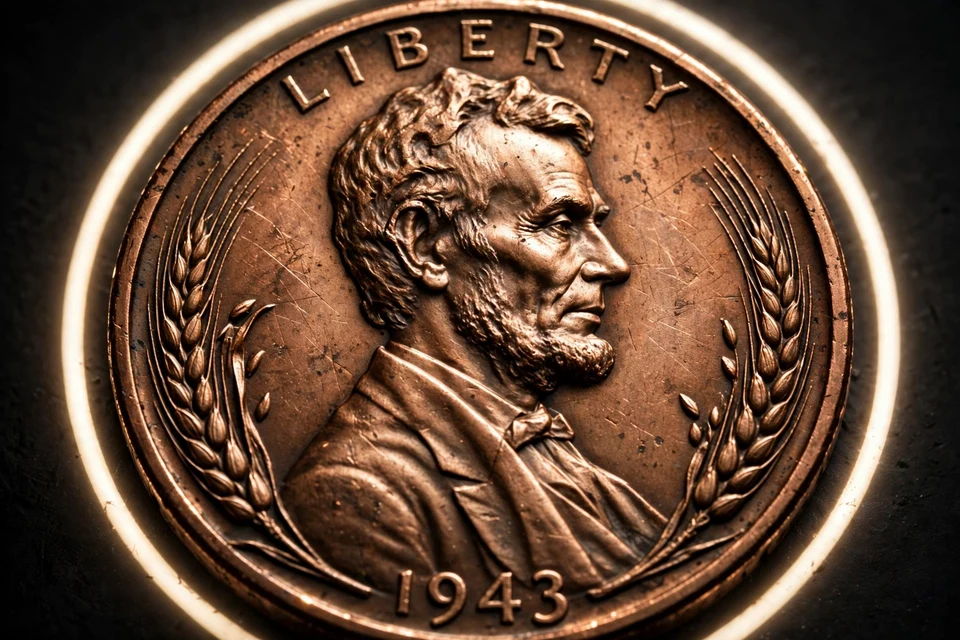
During World War II, copper became a critical war material — shell casings, ammunition, and communications wire all demanded it. To conserve copper for the war effort, the U.S. Mint made a radical change: for the first and only time in history, pennies were struck from zinc-coated steel instead of bronze.
The result was a coin that looked nothing like a normal penny. The 1943 steel cent was silver-gray, magnetic, and weighed 2.70 grams instead of the usual 3.11 grams. Production was enormous: 684,628,670 steel cents at Philadelphia (no mint mark), 217,660,000 at Denver (D), and 191,550,000 at San Francisco (S). That is why an ordinary 1943 steel penny is worth only a few cents to a few dollars depending on condition.
But during the changeover, a handful of leftover bronze planchets — the blank metal discs from 1942 production — were still lodged in the corners of the presses and tote bins. When the 1943-dated dies started striking steel cents, those trapped bronze blanks were fed into the machines by mistake. The presses stamped them, inspectors missed them, and they slipped into circulation. That accident created the most valuable penny in existence.
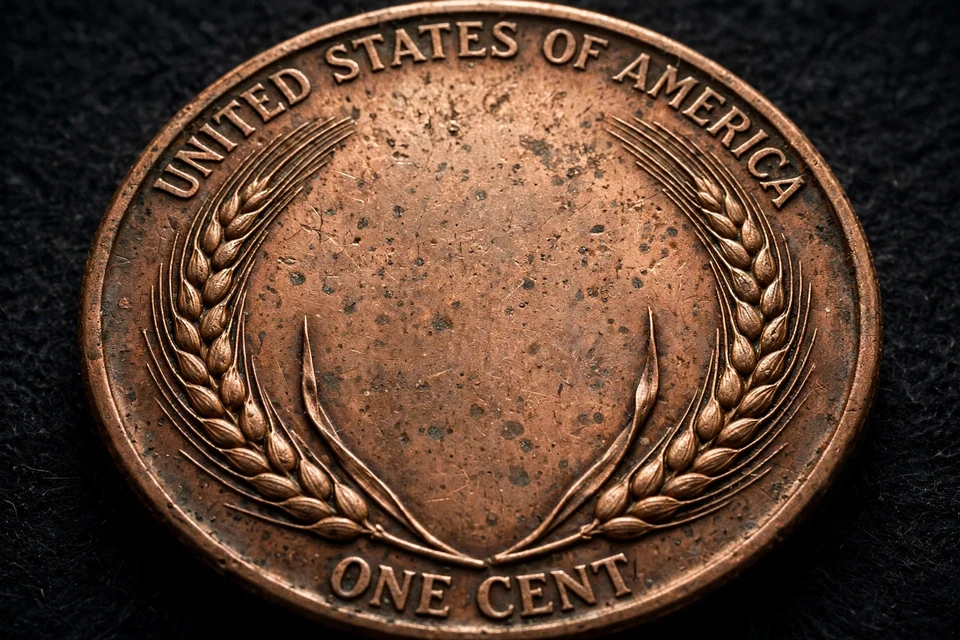
How Many 1943 Copper Pennies Exist — and What Are They Worth?
Experts estimate fewer than 30 genuine 1943 bronze cents are known, and the breakdown by mint makes this a true unicorn hunt:
- Philadelphia (no mint mark): roughly 10–20 examples known. Authenticated specimens have sold for $100,000+ even in lower grades, with finer examples topping $372,000.
- San Francisco (S): fewer than 5 known. One San Francisco bronze cent sold for $504,000 in 2020.
- Denver (D): exactly one confirmed example exists. Graded PCGS MS64BN, that unique 1943-D bronze cent sold for $1.7 million in 2010 — the all-time record for any Lincoln cent.
That record stands because the 1943 copper penny is one of the most idealized coins in American numismatics. Even heavily worn authenticated examples have brought $200,000 or more, and the market has climbed steadily for decades: one sold for $10,000 in 1981, another brought $82,500 in 1996, and today $100,000–$250,000 is the normal range for genuine specimens in mid-grade condition.
There is also a mirror-image error from the other side of the war: the 1944 steel cent. When the Mint returned to bronze in 1944, a few leftover steel planchets were accidentally struck with 1944 dies. Fewer than 30 are known, and a verified example is worth $75,000 or more — so if your 1944 penny sticks to a magnet, that is worth investigating too.
The 3 Tests: How to Tell If Your 1943 Penny Is Valuable
Almost every "1943 copper penny" that surfaces turns out to be fake — but the genuine ones pass three tests that fakes consistently fail. You need a magnet and a digital jewelry scale (a kitchen scale is not precise enough).
Test 1: The magnet test. This is the dealbreaker. Bronze is not magnetic; steel is. Hold a magnet to your 1943 penny. If it sticks, you have the common steel version — worth a few cents, not a fortune. If it does NOT stick, move to test 2. This one test rules out over 99% of candidates instantly, including the most common fake (a copper-plated steel cent, which still sticks to a magnet).
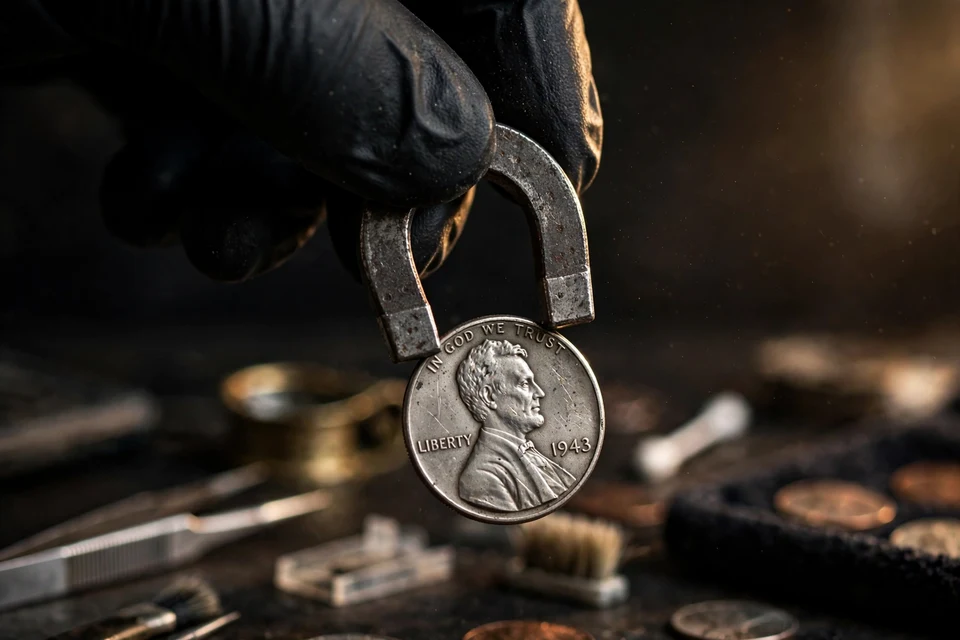
Test 2: The weight test. A genuine bronze 1943 cent weighs approximately 3.11 grams — the same as every normal bronze penny. A steel cent weighs about 2.70 grams. Weigh your coin on a precision digital scale. If it reads near 3.11 grams and failed to stick to the magnet, your heart rate is allowed to rise.
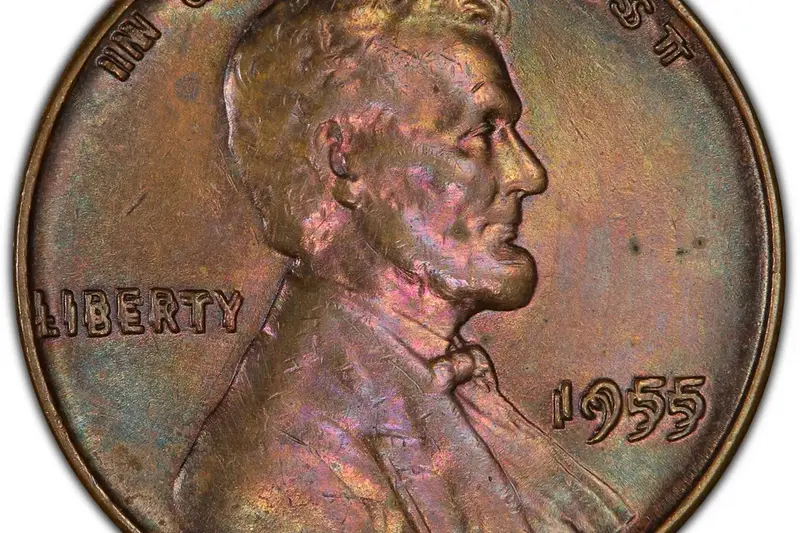
Test 3: The date inspection. Counterfeiters frequently alter the date on a common 1945, 1948, or 1949 copper cent to read "1943." Under magnification, look closely at the "3." On a genuine coin, the 3 matches the depth and heavier font style of the other digits. An altered date often looks skinny, mispositioned, or shows tool marks where metal was moved — the "4" on a 1948-donor coin sits in the wrong position relative to the rest of the date.
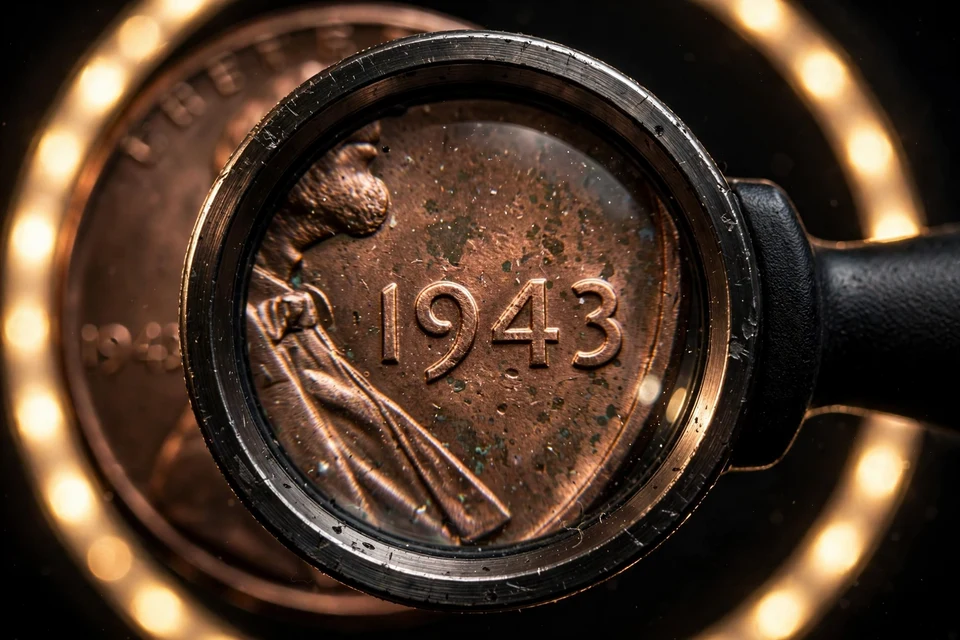
If your coin passes all three tests, stop handling it immediately. Skin oils damage the surface and lower the grade. Place it in a PVC-free coin flip or holder, and have it authenticated and certified by a major grading service like PCGS or NGC. Authentication is non-negotiable at this value level — no buyer pays six figures for an uncertified claim.
What Is a Regular 1943 Steel Penny Worth?
The copper error gets the headlines, but collectors also ask about the ordinary steel version. Here is the honest picture: most circulated 1943 steel cents are worth a few cents to a dollar. Uncirculated examples with full original luster are worth more — typically $5+ for choice mint-state pieces, with the finest certified examples (MS-68 grade) reaching hundreds of dollars. Repunched mint marks and doubled-die varieties on steel cents can add premiums: a strong doubled die can bring four figures in high mint state.
The mistake to avoid is "reprocessed" steel cents — original coins stripped and re-plated to look shiny new. They look impressive but carry almost no collector premium. Original surfaces always win.
Where to Hunt for One
1943 copper pennies have turned up in the most ordinary places: pocket change, inherited coin jars, bank rolls, and old paper coin wrappers. The first examples were discovered after the war — two surfaced in 1947, another in 1958 — and because they look almost identical to ordinary pennies of other years, an unknown number could still be sitting in collections unrecognized. Check inherited collections first; that is where the famous $200,000+ discoveries tend to come from.
FAQ: 1943 Copper Penny Value
How much is a 1943 copper penny worth?
Authenticated 1943 bronze cents typically bring $100,000–$250,000, with finer examples exceeding $500,000. The record stands at $1.7 million for the unique Denver-mint example. Worn genuine examples rarely fall below six figures.
Will a 1943 copper penny stick to a magnet?
No. Genuine bronze cents are not magnetic. If your 1943 penny sticks to a magnet, it is the common steel version or a copper-plated steel fake.
How do I know if my 1943 penny is copper or steel?
Three tests: it should NOT stick to a magnet, should weigh about 3.11 grams (steel weighs 2.7 grams), and should have the warm reddish-brown color of copper rather than the silvery-gray of steel.
What is a 1943 steel penny worth?
Circulated examples are worth a few cents to a dollar. Choice uncirculated steel cents bring $5+, and the finest certified specimens can reach hundreds of dollars.
How many 1943 copper pennies exist?
Fewer than 30 genuine examples are confirmed across all mints: roughly 10–20 from Philadelphia, fewer than 5 from San Francisco, and exactly one from Denver.
Is Your Penny the $1.7 Million Error?
Run our free Coin Value Checker tool to compare your 1943 penny against real market ranges, or use the Error Identifier tool to confirm whether your coin shows the bronze-error characteristics — magnet behavior, weight, and mint mark all checked in seconds. If it passes the big three tests, your next stop is a professional grading service.