How Many Nickels in a Roll? From $2 Rolls to $500,000+ Hidden Finds
Coin values · 6 min read · Updated October 18, 2026
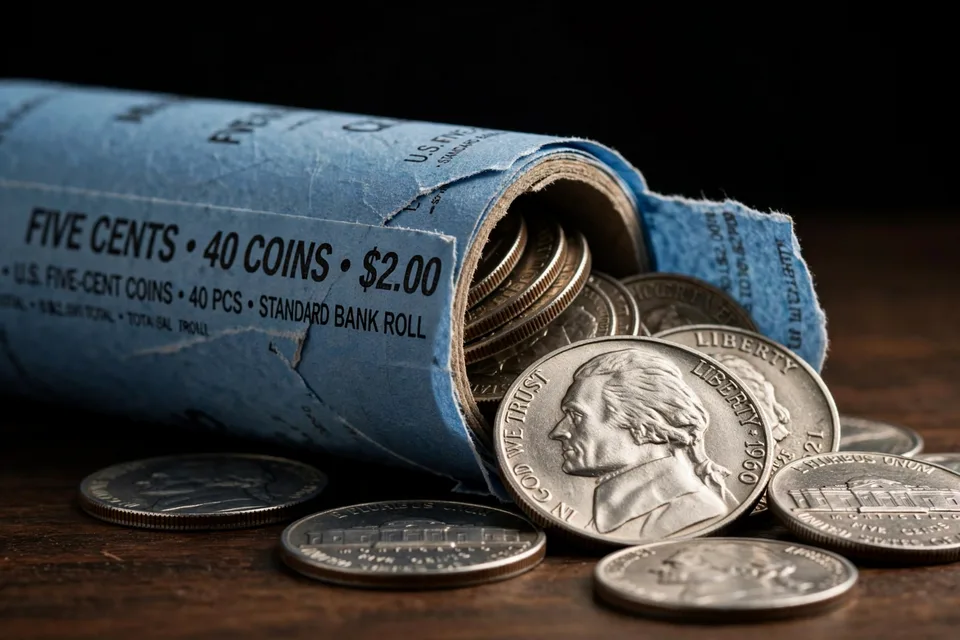
How many nickels are in a roll? A standard roll of nickels contains 40 nickels, worth $2.00 at face value. That is the short answer. But if you are a collector, that $2 roll deserves a much closer look before you spend it — because coin rolls are where some of the most valuable five-cent pieces in American numismatics quietly surface: 35% silver war nickels, a key-date 1950-D, and even the legendary 1918/7-D overdate Buffalo nickel whose record price topped half a million dollars.
How Many Nickels Are in a Roll?
Every denomination has its own standard roll size, set so rolls stay manageable to stack, count, and transport:
| Coin | Coins per roll | Roll value | Wrapper color |
|---|---|---|---|
| Penny | 50 | $0.50 | Red |
| Nickel | 40 | $2.00 | Blue |
| Dime | 50 | $5.00 | Green |
| Quarter | 40 | $10.00 | Orange |
| Half dollar | 20 | $10.00 | — |
At 5 grams per coin, a full roll of nickels weighs 200 grams — about 7 ounces. Bank-wrapped nickel rolls come in blue paper; rolls you wrap yourself at home use the same standard blue wrappers sold at banks and office-supply stores.
What Does a Nickel Roll Look Like — and Where Do You Get One?
Ask any bank teller for nickel rolls and you will get tidy blue paper tubes, machine-wrapped or hand-wrapped, each marked “$2.00”. Coin roll hunting — buying rolls from banks, searching them for rarities, and returning the common coins — is one of the most popular ways collectors build collections on a budget. Nickels are a favorite for roll hunters for two reasons: very few people bother searching them, and older silver-alloy nickels still turn up regularly in circulation.
The Valuable Nickels Hiding in $2 Rolls
Silver War Nickels (1942–1945)
During World War II, nickel metal was reserved for armor plate, so the Mint struck Jefferson nickels in an emergency alloy: 56% copper, 35% silver, and 9% manganese. These war nickels — the only silver five-cent pieces ever struck for circulation — contain about 0.056 troy ounces of silver each and carry collector value of $3+ even when well worn, far above their five cents face.
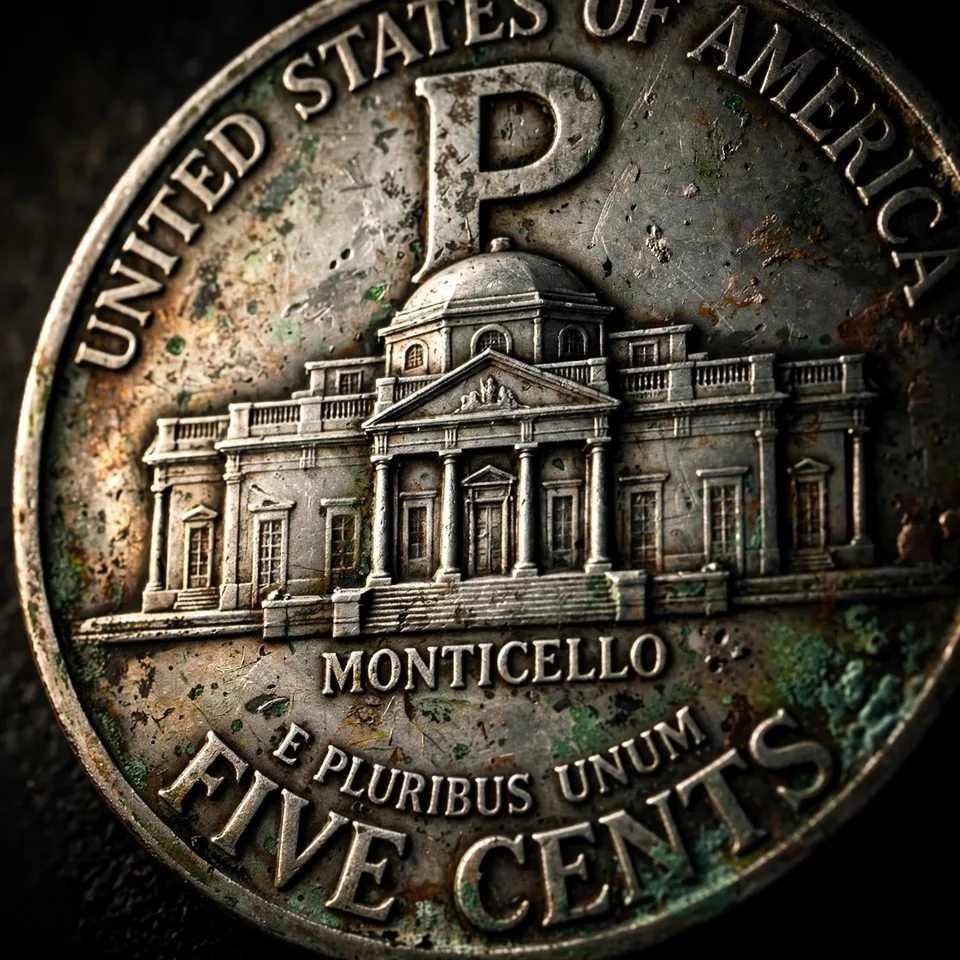
How do you spot one? Look for a large mint mark stamped above Monticello on the reverse. On every other Jefferson nickel, the mint mark sits beside the date or near the building's base — on war nickels it is oversized and placed prominently over the dome. Note that 1942 exists in both regular and silver versions, so check every 1942 carefully.
The 1950-D Key Date
The 1950-D Jefferson nickel had a mintage of just 2,630,030 — the lowest of the entire Jefferson series. Circulated examples start around $1–$7+, and mint-state pieces climb steeply. The all-time record is $17,250+, paid at Heritage Auctions in 2006 for a PCGS MS-67 with the Full Steps designation. Because collectors hoarded this issue the moment its low mintage became known, circulated pieces are actually harder to find than uncirculated ones — making a genuinely worn 1950-D pulled from a roll a special find.
Buffalo Nickel Treasures
Buffalo nickels (1913–1938) still appear in rolls often enough to keep hunters hopeful, and the key dates command serious money:
- 1918/7-D overdate — created when a 1917-dated hub struck a 1918 die, this is the holy grail of nickel errors. Even heavily worn examples bring $700+, and a superb uncirculated PCGS MS65+ example realized a record $511,875 at a GreatCollections auction in February 2024.
- 1926-S — the lowest-mintage San Francisco Buffalo. Worn examples carry $20+ collector value.
- 1916 doubled die obverse — dramatic doubling on the date, with a record price of $281,750 for a PCGS MS64 sold by Bowers & Merena in 2004.
- 1937-D three-legged Buffalo — a die-polishing mishap erased the bison's front leg. Worth $500+ even in lower grades.
The Henning Counterfeit — an Instant Rarity
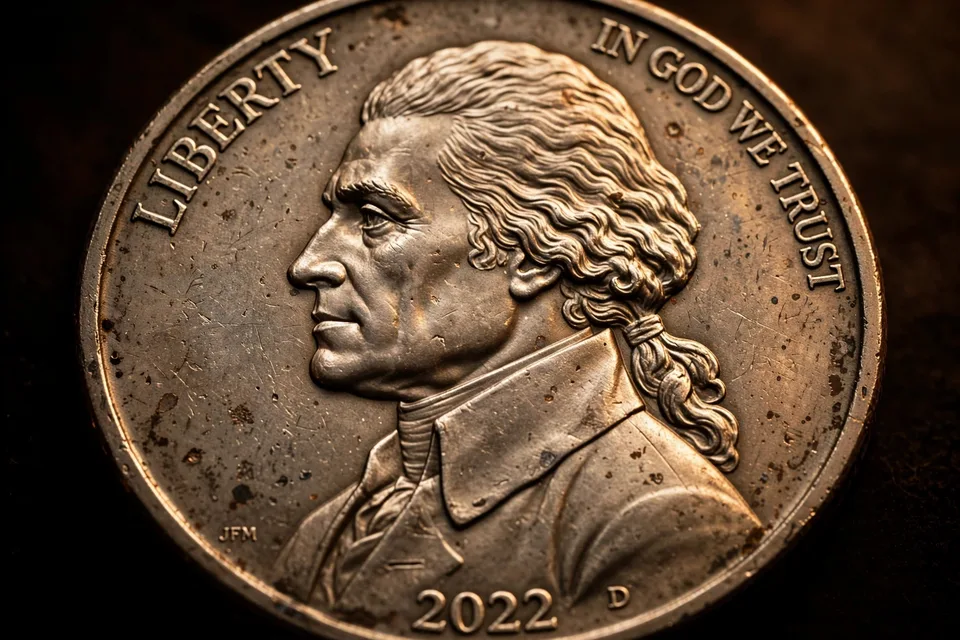
Here is a strange one: Francis Henning forged nickels in the 1950s, including 1944 war nickels — but forgot the oversized wartime mint mark. Any 1944 nickel without a large mint mark above Monticello is a Henning counterfeit, and collectors pay $15+ for this famous fake. Weigh it: Henning's coins run about 5.4 grams versus the genuine 5.0.
How to Spot a Silver War Nickel in Seconds
- Check the date — only 1942, 1943, 1944, and 1945 can be war nickels.
- Look at the reverse — a large P, D, or S above Monticello's dome confirms it.
- Check the color — war nickels develop a distinctive dull green-gray patina from the manganese content.
- Weigh it if unsure — 5.0 grams is correct for both, so use a magnet instead: war nickels are non-magnetic, while modern nickels are slightly magnetic.
Coin Roll Hunting Tips for Nickels
- Ask banks for customer-wrapped rolls — these pass through fewer hands and hold more surprises than machine-wrapped Brinks boxes.
- Set aside every pre-1960 nickel — they are disappearing from circulation fast.
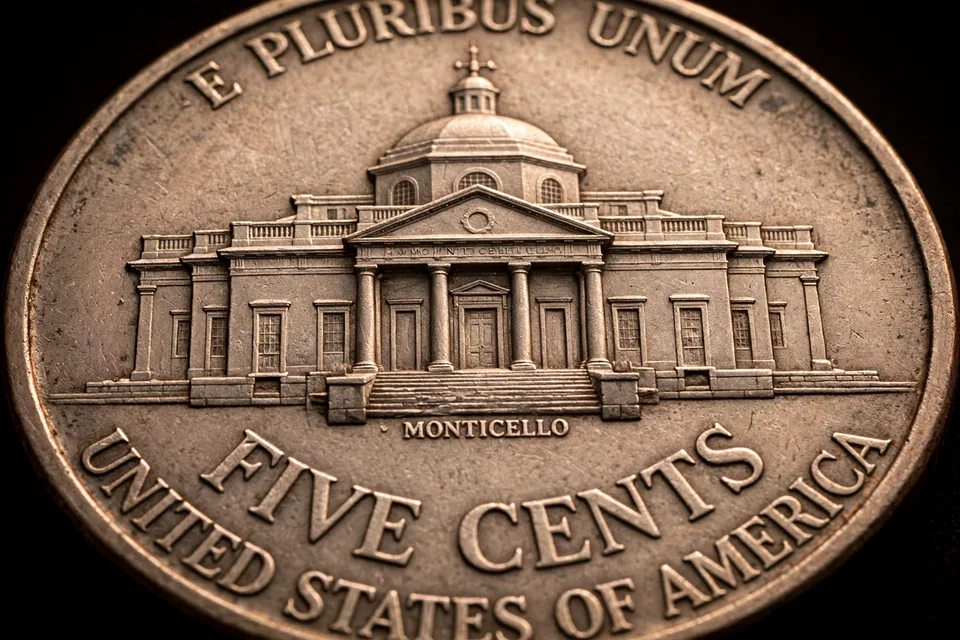
- Check for Full Steps — Jefferson nickels with five or more complete, unbroken steps at the base of Monticello's porch can be worth many times a normal example of the same grade.
- Never clean your finds — cleaning destroys collector value instantly.
- Sort quietly and return politely — banks appreciate hunters who keep the system friendly; many will order boxes for regulars.
Frequently Asked Questions
How many nickels are in a roll?
A standard U.S. nickel roll holds 40 nickels, worth $2.00 at face value.
How much is a roll of nickels worth?
Face value is $2.00. But a roll containing silver war nickels or key dates can carry far more — a single 1950-D can exceed the roll's face value several times over.
What nickels should I look for in rolls?
Silver war nickels (1942–1945), the 1950-D key date, Buffalo nickels with key dates or errors like the 1937-D three-legged, pre-1960 Jefferson nickels, and coins with the Full Steps designation.
Are nickels from the bank worth anything?
Common circulated nickels are worth face value, but bank rolls still regularly yield silver war nickels worth $3+ and occasional key dates. The thrill — and the value — is in the hunt.
How do I tell if a nickel is silver?
Check for a date of 1942–1945 plus a large mint mark above Monticello on the reverse. That oversized mint mark is the definitive marker of a silver war nickel.
TRY OUR TOOLS: Found something interesting in your roll? Run it through our Coin Value Checker to see its current market range, and use the Key Date Checker to see whether your nickel is one of the scarce dates collectors pay premiums for. Visit the Tools section on this site to check your finds in seconds.
Checking your change costs nothing — but the nickel you almost spent could be worth hundreds. Grab a roll, look closely, and hunt.