How Much Is a Dime Worth? From Pocket Change to $200,000+
Coin values · 7 min read · Updated October 18, 2026
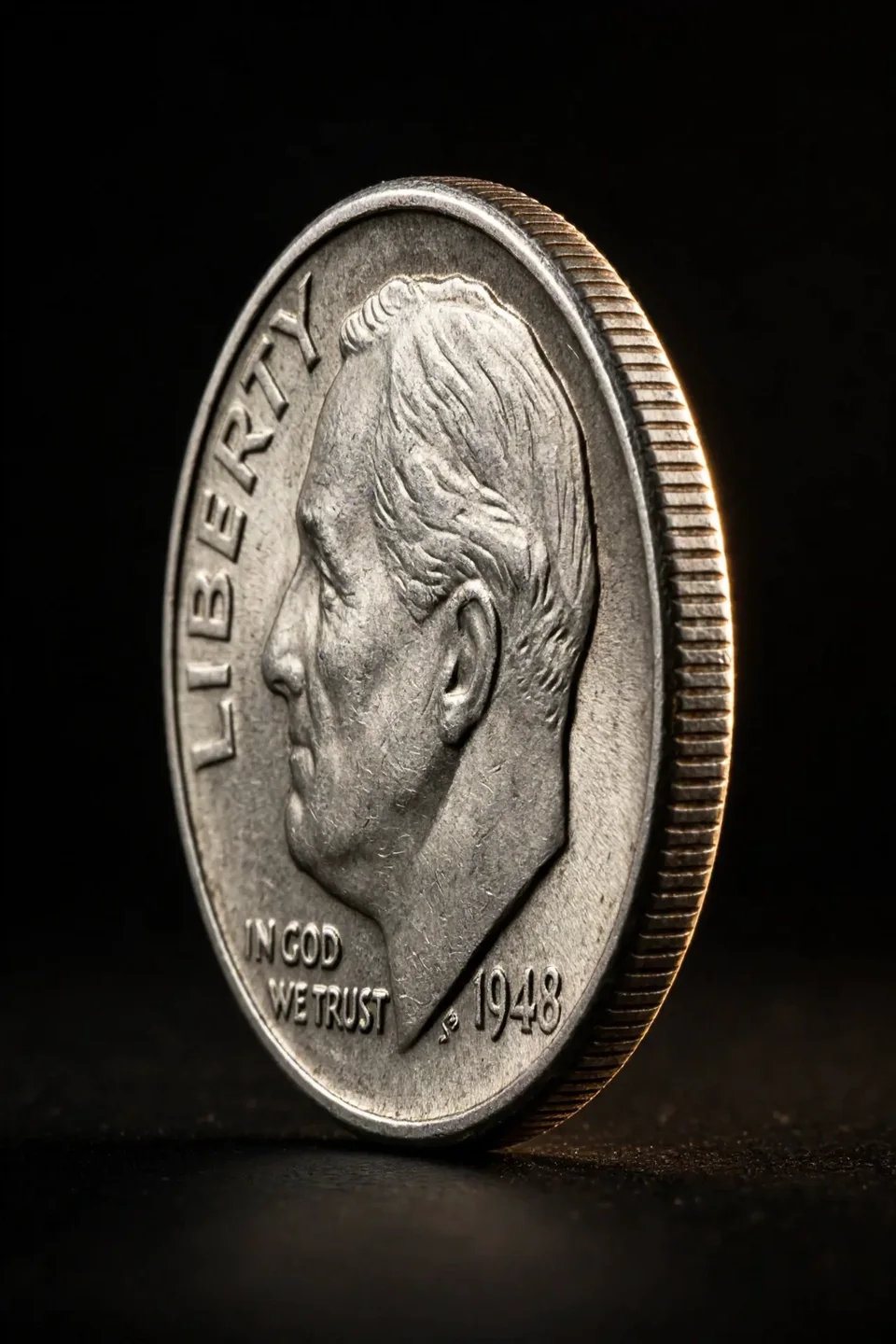
How much is a dime worth? The honest answer: most dimes are worth exactly ten cents — but a small group of silver dimes, key dates, and famous mint errors are worth far more. Silver dimes struck between 1946 and 1964 carry about $4.10+ in silver melt value alone, circulated key dates sell for $1,000+, and the rarest Mercury dime on record brought $207,000 at auction. Here is how to find out what your dime is really worth.
What Is a Dime Worth? The Short Answer
- Modern clad dimes (1965–today): 10 cents, unless they carry a mint error or are high-grade Full Torch examples.
- Silver dimes (1946–1964): about $4.10+ each in melt value, since they are 90% silver — worth more than 40 times face value even in worn condition.
- Key dates and major errors: $100 to $200,000+, depending on the variety and grade.
Everything that follows explains which category your dime falls into, and how to spot the valuable ones in your own change.
Why Silver Dimes Are Worth More Than Face Value
Before 1965, dimes were made of 90% silver and 10% copper, weighing 2.5 grams each. From 1965 onward, the Mint switched to a copper-nickel clad sandwich that contains no silver at all. That single change is why a 1964 dime and a 1965 dime — identical in size — are worth completely different amounts.
Check the date first. Any Roosevelt dime dated 1964 or earlier, and any Mercury dime (1916–1945), is 90% silver. Look at the coin's edge: silver dimes show a solid silver-gray edge, while clad dimes reveal a distinct copper-brown stripe running through the middle. Worn silver dimes still track silver prices, which is why even a heavily circulated example carries several dollars of melt value.
The Rarest Dimes Worth Serious Money
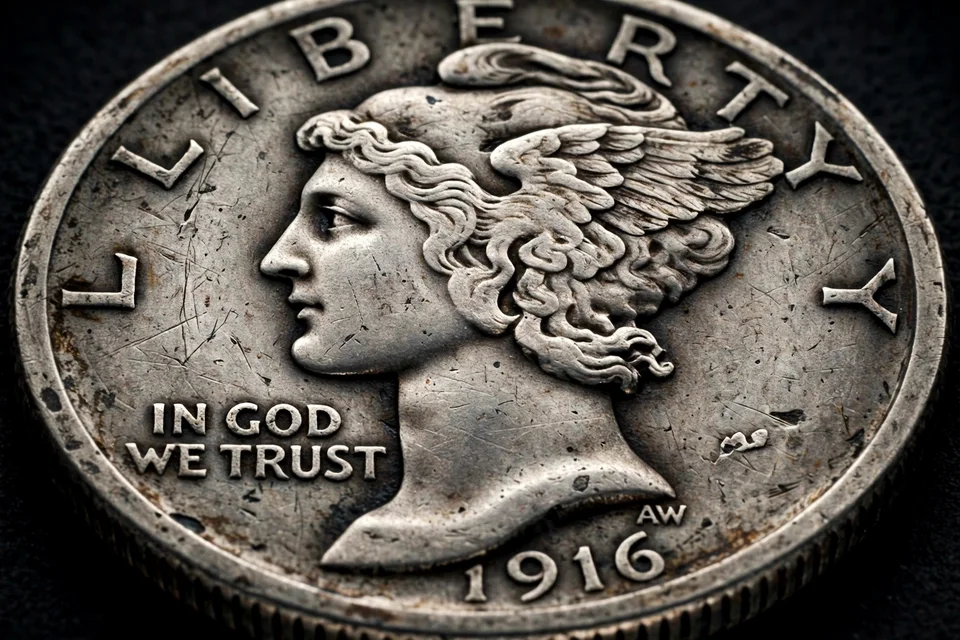
The 1916-D Mercury Dime: $1,000+ to $207,000
The undisputed king of the series. With a mintage of just 264,000 — the lowest of the entire Mercury dime run — the 1916-D is one of the rarest regular-issue 20th-century American coins. Denver struck its first Mercury dimes late in 1916, and most saw heavy circulation, so survivors are scarce in every grade.
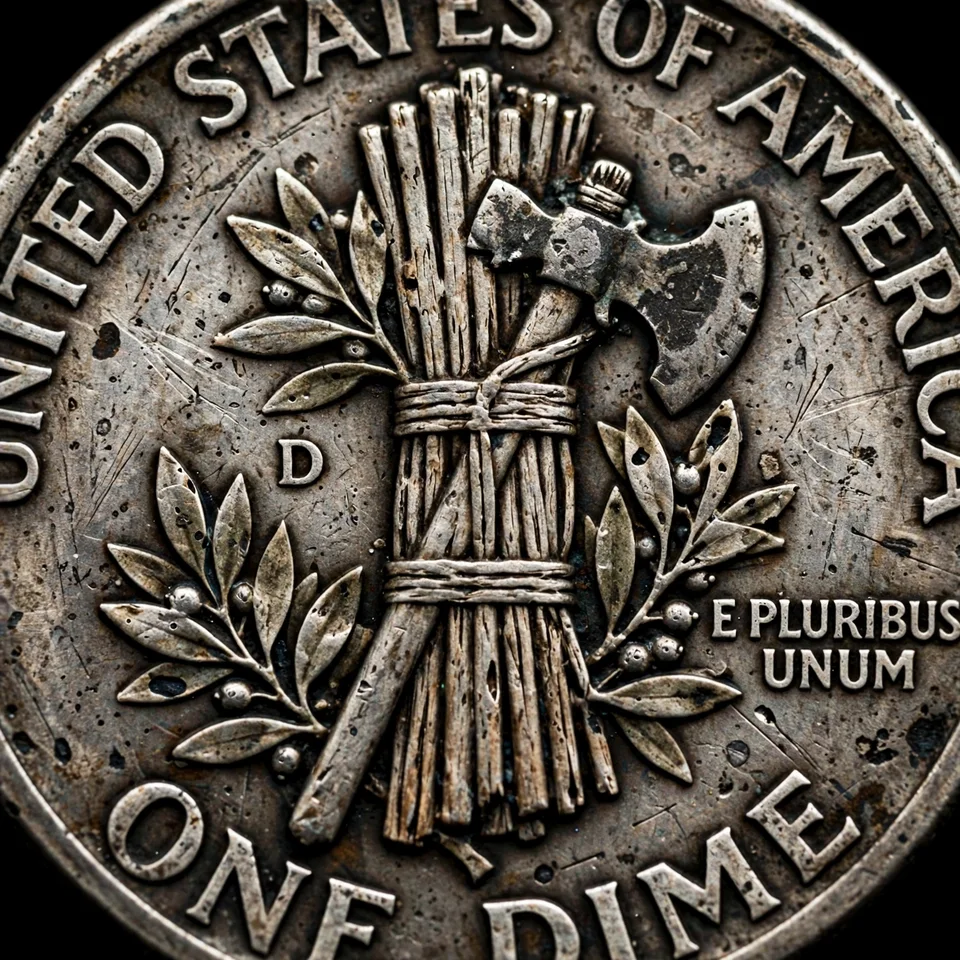
Values start around $1,000+ even in heavily worn Good-4 condition and climb past $25,000+ in Mint State 65. The auction record stands at $207,000 for a PCGS MS67 Full Bands specimen sold by Heritage in 2010. Be warned: this is one of the most counterfeited American coins, usually by adding a fake “D” to a common 1916 Philadelphia dime. Any 1916-D should be authenticated by PCGS or NGC before purchase.
The 1942/1 Mercury Dime Overdate: $379+
One of the most dramatic mint errors ever released into circulation. In 1942, the Philadelphia Mint accidentally used a die still carrying the previous year's date, punching the “2” of 1942 over remnants of a “1.” With a magnifier you can see traces of the 1 around the 2, and doubling on the 4 — no microscope required.
Circulated examples start at $379+ in Good condition, while uncirculated specimens reach $18,000+. The Denver version (1942/1-D) exists too, with the Philadelphia variety showing the stronger overdate.
The 1982 No-P Roosevelt Dime: $55+ to $2,185
In 1980 the Philadelphia Mint began placing a “P” mint mark on dimes for the first time. Two years later, one obverse die missed that punch — and struck an estimated 75,000 coins before anyone noticed. The error is easy to check: a normal 1982 Philadelphia dime has a small “P” just above the date near Roosevelt's neck; the error coin is completely blank there.
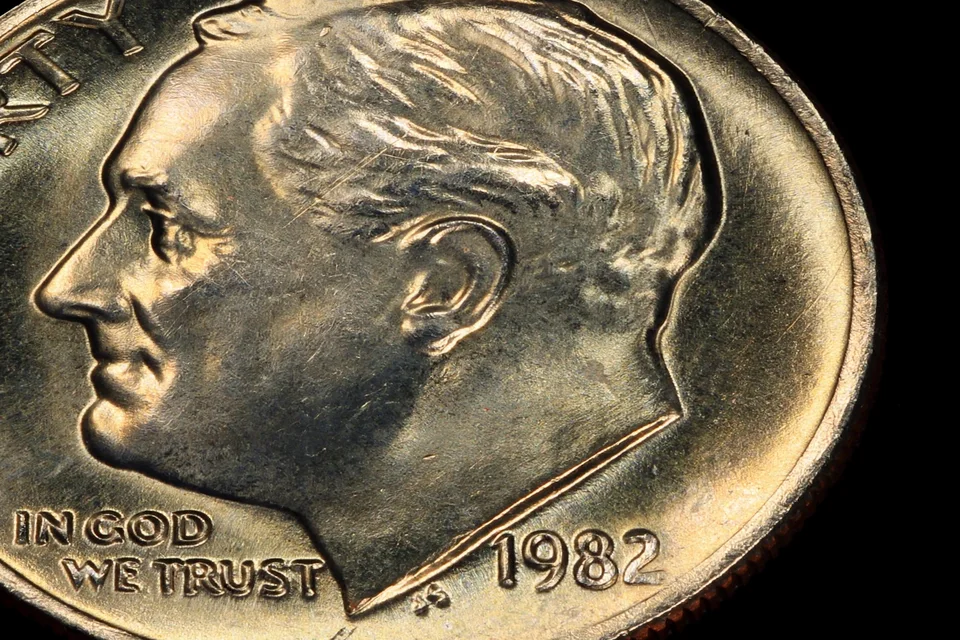
Circulated examples trade for $55+ even with wear, mint-state specimens bring $175+, and the auction record is $2,185 for a Strong Strike graded PCGS MS-68. Strong Strike coins — with crisp date detail — command a consistent premium over the softer Weak Strike variety.
The 1996-W Roosevelt Dime: $15+
Struck at West Point to mark the 50th anniversary of the Roosevelt dime design, the 1996-W was issued only inside 1996 mint sets — never released for circulation. With 1,457,000 struck, it remains the only non-bullion coin ever produced at West Point. Mint-set examples trade from $15+ and climb steadily in higher grades.
How to Tell If Your Dime Is Valuable
- Read the date. 1964 or earlier means silver; 1942 or earlier means a Mercury dime. Flag every silver coin.
- Check the edge. A solid silver edge confirms pre-1965 composition; a copper stripe means clad.
- Find the mint mark. On Mercury dimes it sits on the reverse, left of the fasces near the “E” in ONE — that tiny letter separates a common coin from a $1,000+ key date.
- Look for the 1982 No-P. Any 1982 dime with no mint mark above the date needs a second look.
- Never clean it. Cleaning strips original surfaces and destroys collector value permanently. Handle by the edges and place valuable finds in protective holders.
Frequently Asked Questions
Are dimes made of silver today?
No. Since 1965, circulating dimes have been copper-nickel clad with no silver content, which is why modern dimes are worth face value. Only dimes dated 1964 and earlier are 90% silver.
What is a Mercury dime worth?
Common-date Mercury dimes (1916–1945) in worn condition are worth their silver melt value, about $4.10+. Better dates and high grades climb into the hundreds and thousands — the 1916-D starts at $1,000+.
Which Roosevelt dimes are worth keeping?
All 1946–1964 silver issues are worth keeping for melt value. Beyond those, look for the 1982 No-P error ($55+), the 1996-W ($15+), Full Torch (FT) mint-state examples, and doubled-die varieties.
How many silver dimes are in a roll?
A standard 50-coin dime roll of pre-1965 silver dimes contains about $205+ in melt value at current silver prices — one more reason these coins almost never appear in circulation anymore.
Check Your Dime's Value in Seconds
Reading a value chart is a start, but variety identification is where the real money hides. Try our free Coin Value Checker to identify your dime's exact variety and estimated value, or run suspicious coins through the Error Identifier tool to catch doubled dies, overdates, and missing mint marks before they slip past you. Most collectors leave money on the table by guessing — verify instead.